


My Grandmother was initially opposed to me playing Dungeons & Dragons. She was pulled into the hysteria and fear about the game. Eventually, though she would come to accept that this game was a part of my life.
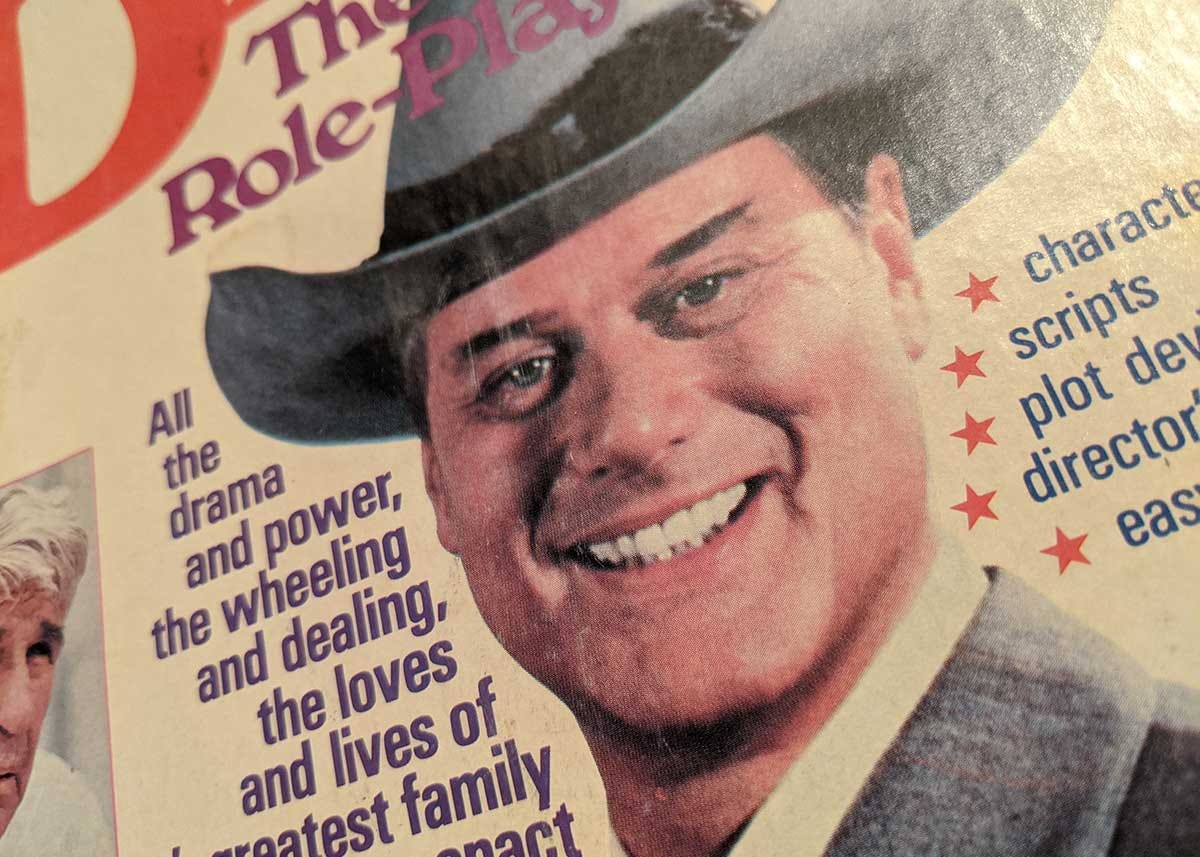
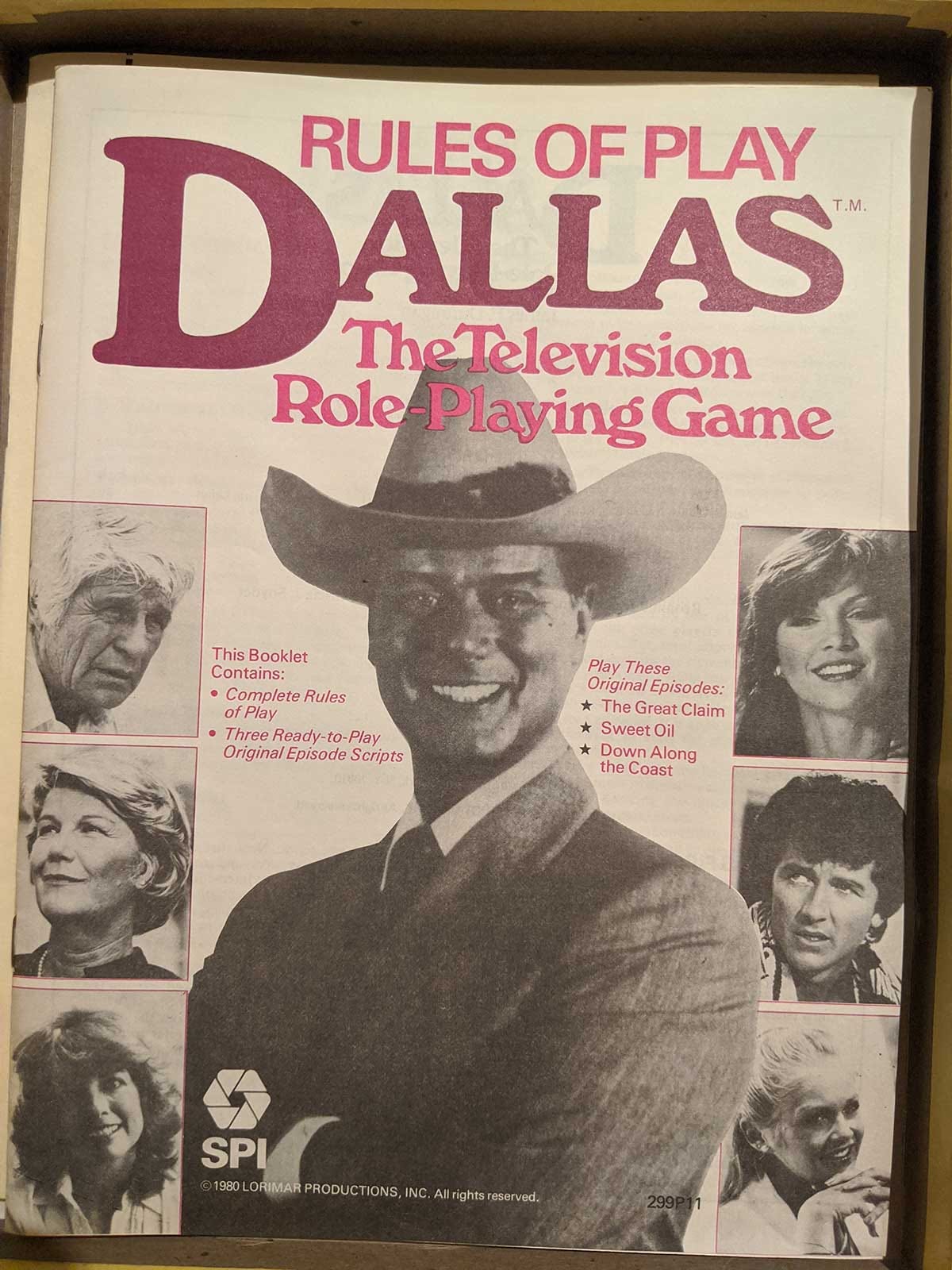
While doing so she bought me a roleplaying game that I think she thought would bridge our two worlds, Dallas: The Television Role-Playing Game.
I had watched Dallas with her many times. It was adult TV and it was thrilling to stay up late to watch it. What was not to love? Still, when I got the game, I wasn’t sure what to make of it. Then I saw that legendary war game designer Jim Dunnigan was credited on the game and that it was made by SPI, Simulations Publications, Inc., maker of DragonQuest. That got me excited and I opened it with gusto.
The game was not just a quick licensed oddity. SPI had been known mostly for serious war games and science fiction or fantasy titles, so Dallas was a strange new direction for them. In a 1980 newspaper piece about the game, Dunnigan described it as a difficult project because historical games could lean on research, while Dallas was copyrighted, current, and full of storylines that had to feel like the show without stepping on the series itself.
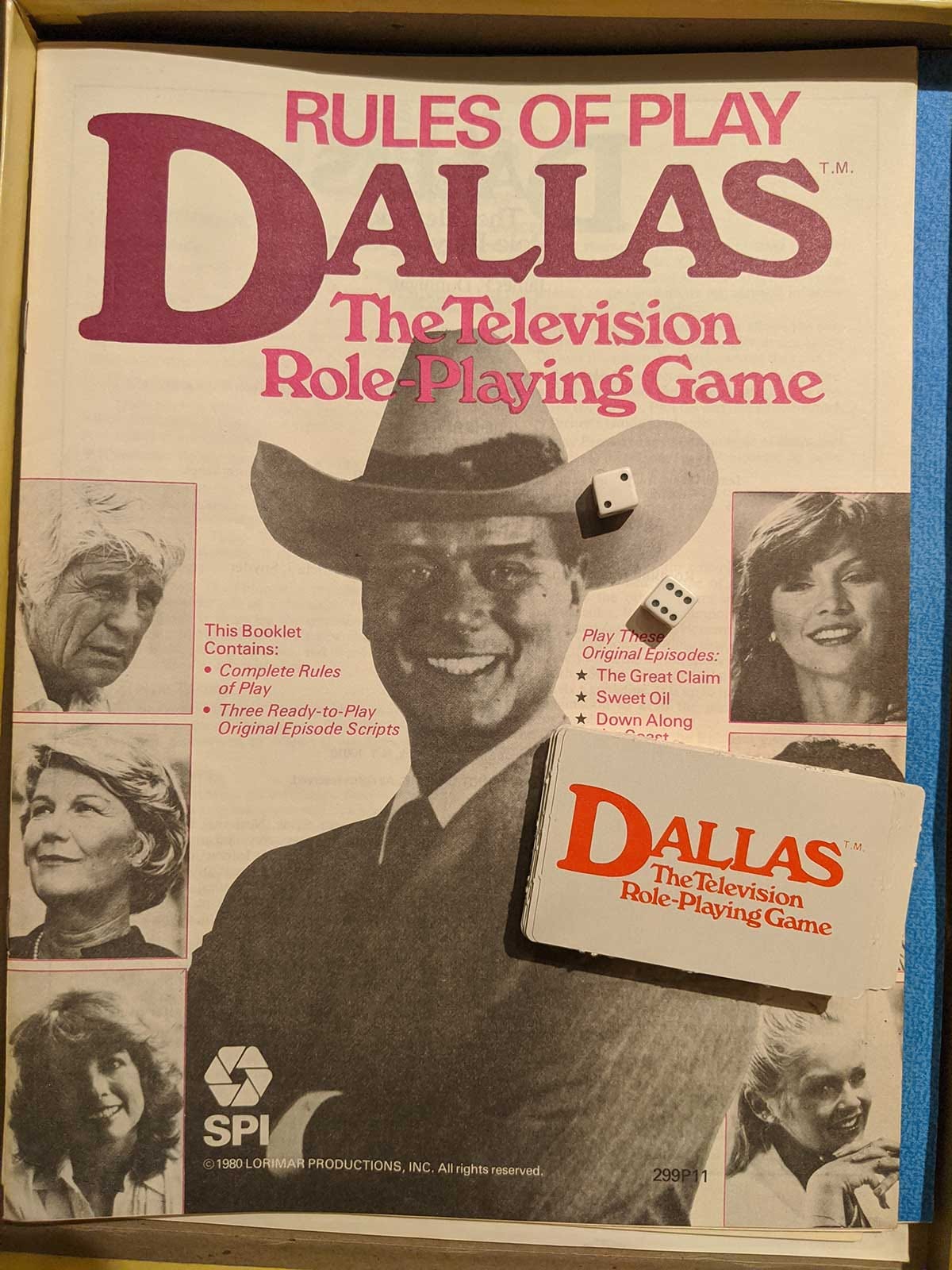
The slim box is very similar to other RPGs in what it included. You got:
Rule booklet
Scriptwriter’s Guide
56 Character cards
1 Director’s reference sheet
9 Character sheets
2 tiny six-sided dice
Dallas: The Television Role-Playing Game Gallery
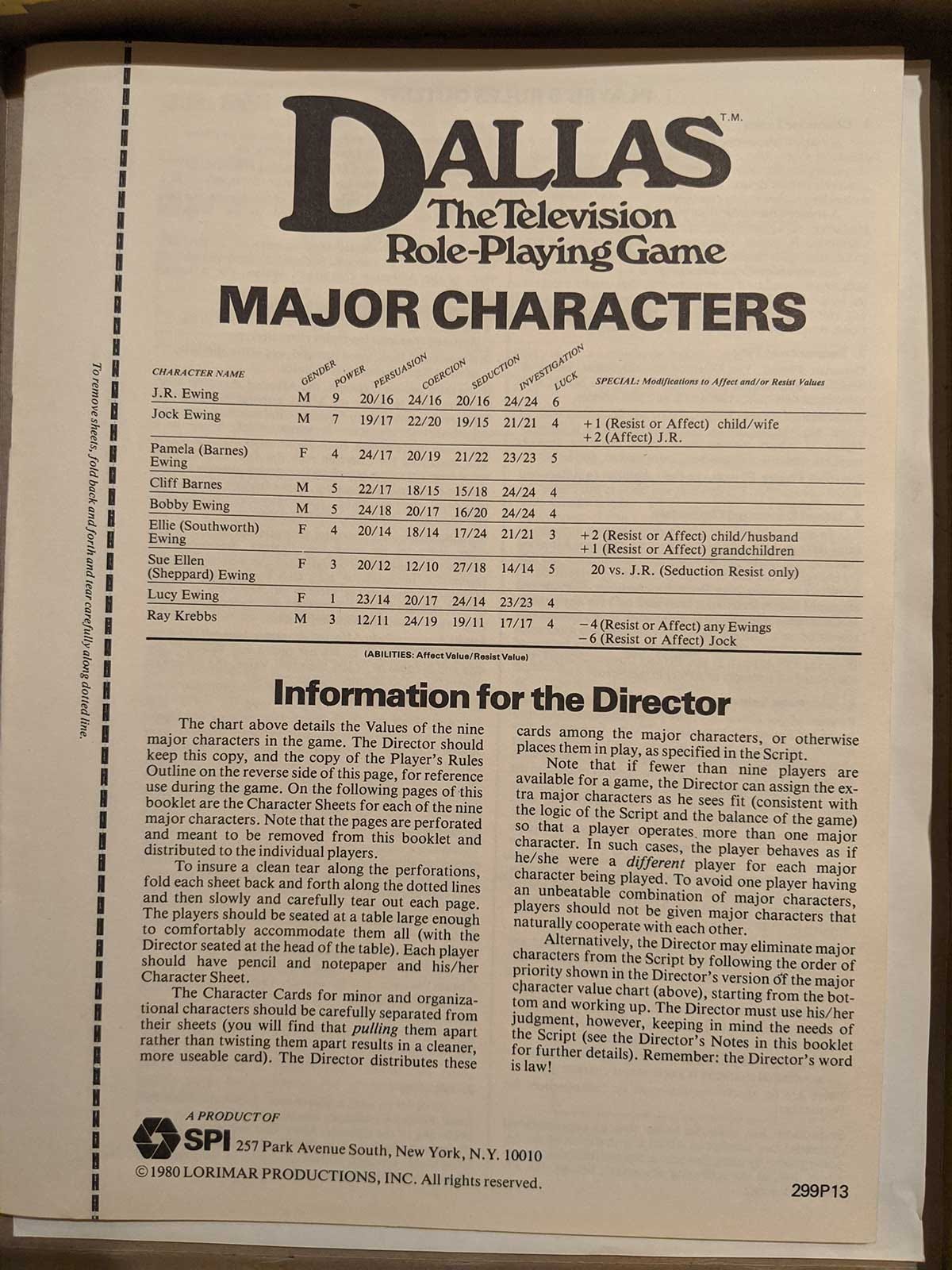
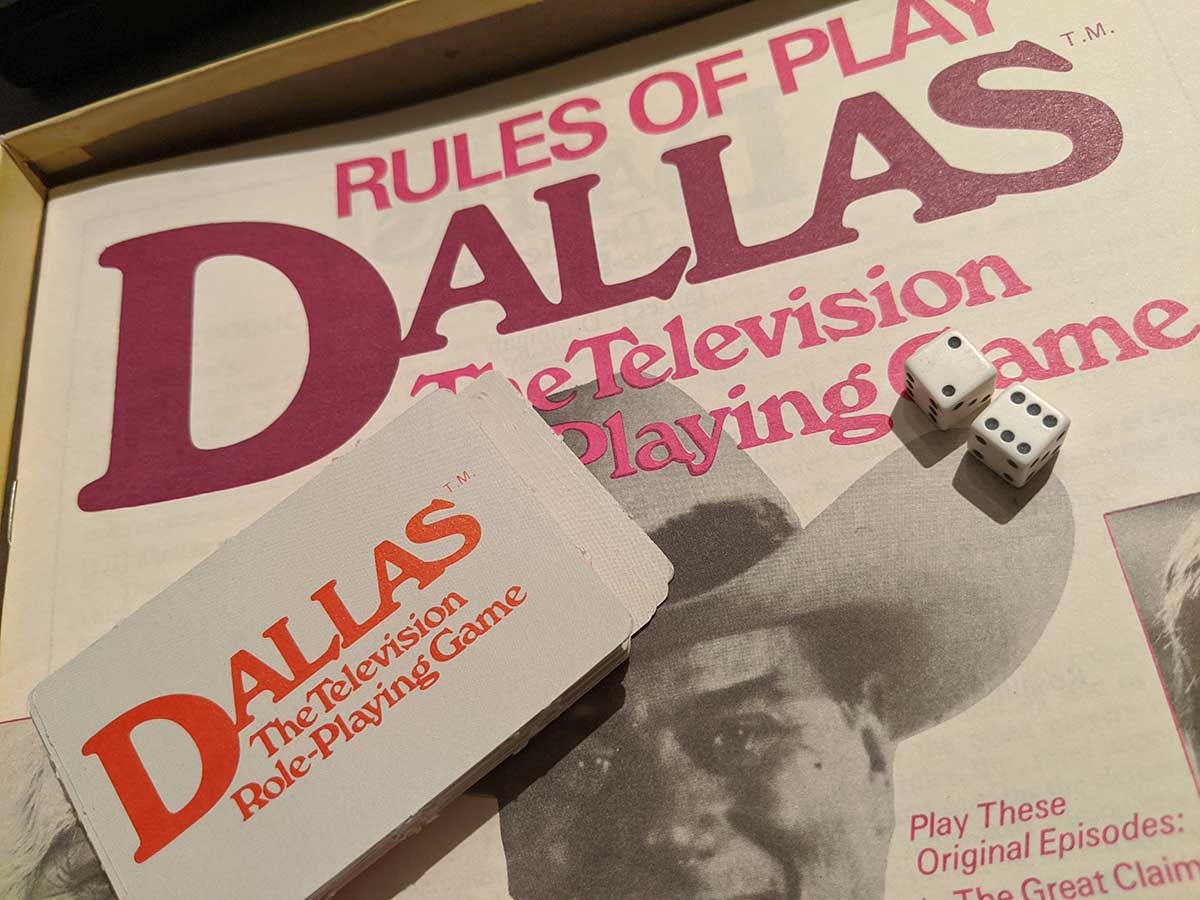
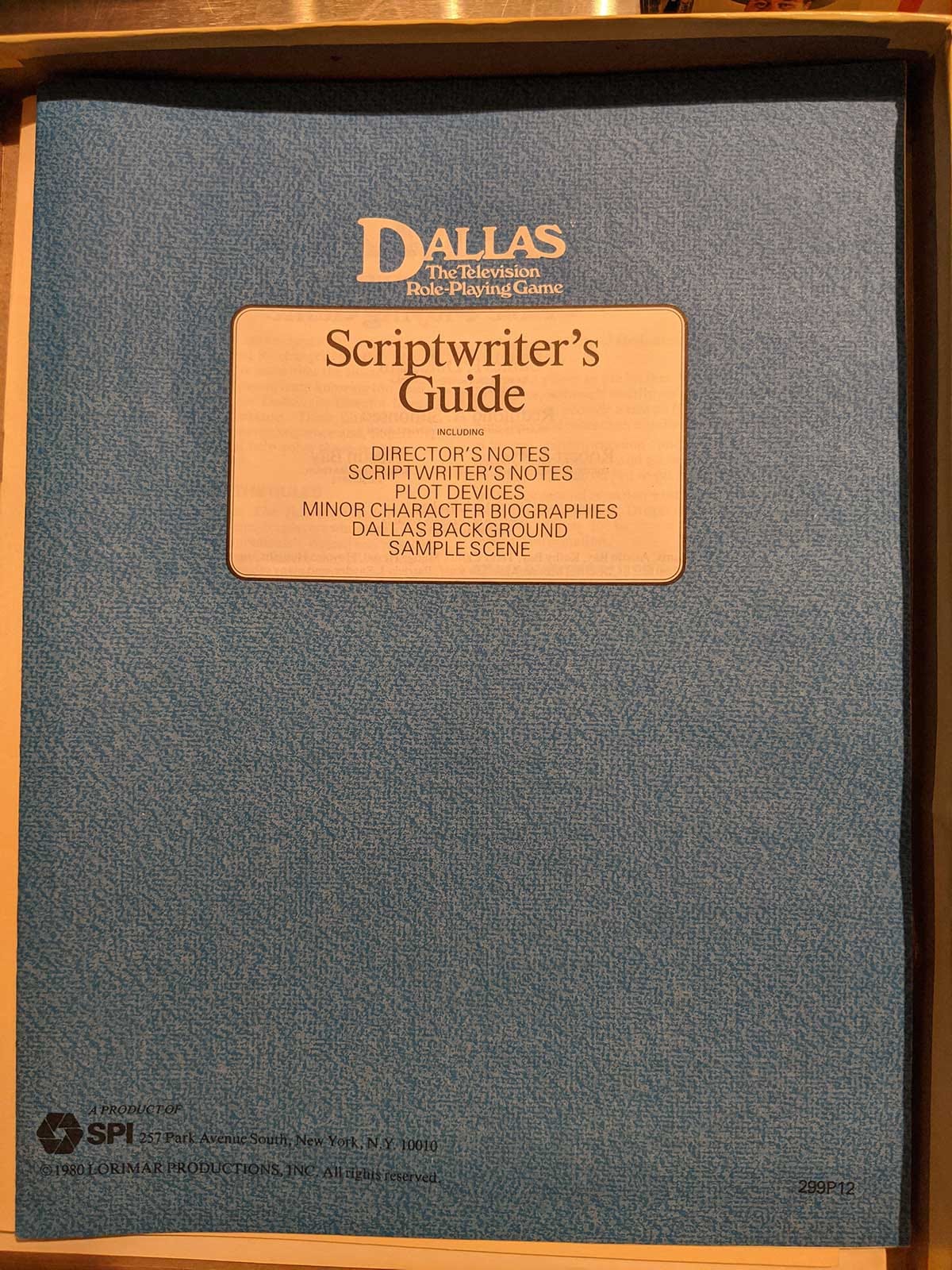
The game is pretty straightforward with six ability scores that shape gameplay: Coercion, Investigation, Luck, Power, Persuasion, and Seduction. Each character has a preset score and you play the ability against each other. If your ability is high enough, things instantly happen. If they are close, that is when you will roll the tiny d6s that came with the game.
There is a funny bit of behind the scenes adjustment in the newspaper article too. Dunnigan said Lorimar objected to the values assigned to some characters. They wanted Jock and Bobby to have more power, and Sue Ellen to be harder to seduce. That is such a specific Dallas problem that it almost makes the whole game make more sense.
The game comes with three original stories or scripts for players to jump into: The Great Claim, Sweet Oil, and Down along the Coast.
Before the game came out, Dunnigan told reporters that Lorimar had final approval over what went into it. That meant the scripts had to be faithful to Dallas, but they also had to avoid some of the subjects the show itself touched. The newspaper article says Lorimar did not want references to drugs, incest, or prostitution, and it also objected to some of the original scripts because they pushed into sensitive areas involving Ray Krebbs and Lucy Ewing.
If you want more, then you as the Director will need to make them. The same goes for extra characters. No character generation method is given. So if you want to add to the Dallas universe with new player characters, be prepared to have to define what that entails.
This is an RPG, but not an open one like Dungeons & Dragons. Instead, characters are seeking out Victory Conditions in each script and whoever has the most wins in the end. This means if you want to make new scripts for the game, you need to consider a bunch of victory conditions for each character in order to make it challenging.
The game is more akin to a large party game with roleplaying elements. I say large because in each of the included scripts all 9 characters are in play. So you better have a large group of people to play with.
I did not have a large group. Nor did any of my friends watch Dallas. So while I tried to play the game several times, hoping to show my grandmother how much I appreciated her support. In the end, the box went into the back of the closet for decades.
Looking back, it is remarkable that this game ever got made. It is easy to see why people were high on Dallas. It was a TV juggernaut. What is more difficult to see is how an RPG could get made for it.
A newspaper writer who tested the game before release had the same basic reaction I did, which is that it was hard to imagine a Dallas RPG until you saw how it worked. He played as J.R., got wrapped up in an FBI investigation, tried to seduce people, and worried about tickets to a Cowboys and Redskins game. That is not dungeon crawling, but it is still a game built around fantasy. It just happens to be the fantasy of being inside a prime time soap opera.
All I can say is that in the early days of D&D and RPGs, so much seemed possible.
Dragons could be slain, alien worlds would be explored and in a basement, in New Jersey, a grandmother and her grandson could struggle for control over a fictional Texas oil family.
It is a fun game and you hit the nail on the head regarding what type of game it is, as it is very much a party game rpg. I think it was an interesting choice that didn't meet the desires of either the RPG crowd or the casual crowd for a gaming experience. Too little crunch for the gamers of the era and too much for the Host a Murder crowd.
I have never heard of this. It's amazing. There were so many RPGs based on TV. There's now even a Space:1999 RPG. That adds to Dr Who RPG, Ghostbusters RPG, erm... there's others.
Never anything like this. Brilliant concept. Scripted victory conditions.